
Tunic Review: A small Fox on a Grand Adventure

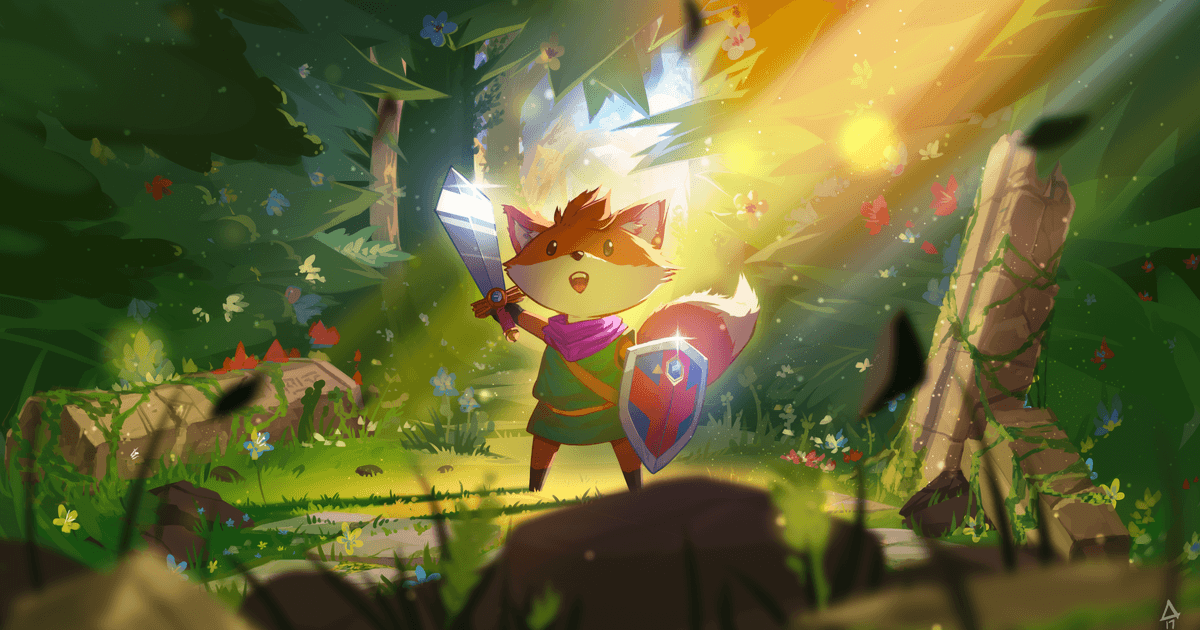
After enjoying Mina the Hollower, I was in the mood for another indie "Zelda-like" game. So I decided to finally give Tunic a try. What I found was an unforgettable experience that comes close to some of the all-time greats in many ways.
Back to being a Kid again
It must have been 1995. I was five or six years old and got my Game Boy together with Zelda: Link's Awakening. Instantly I was enchanted by this game, exploring this open world that felt endless and so mysterious to me as a child. Part of this mystery also came from the fact that I couldn't read at the time.
So for many hours I just stumbled around this world and checked out the booklet that came with it. Sometimes my mum would read parts of the booklet or the game for me, and so I slowly but steadily made progress and played through my first ever Zelda game.
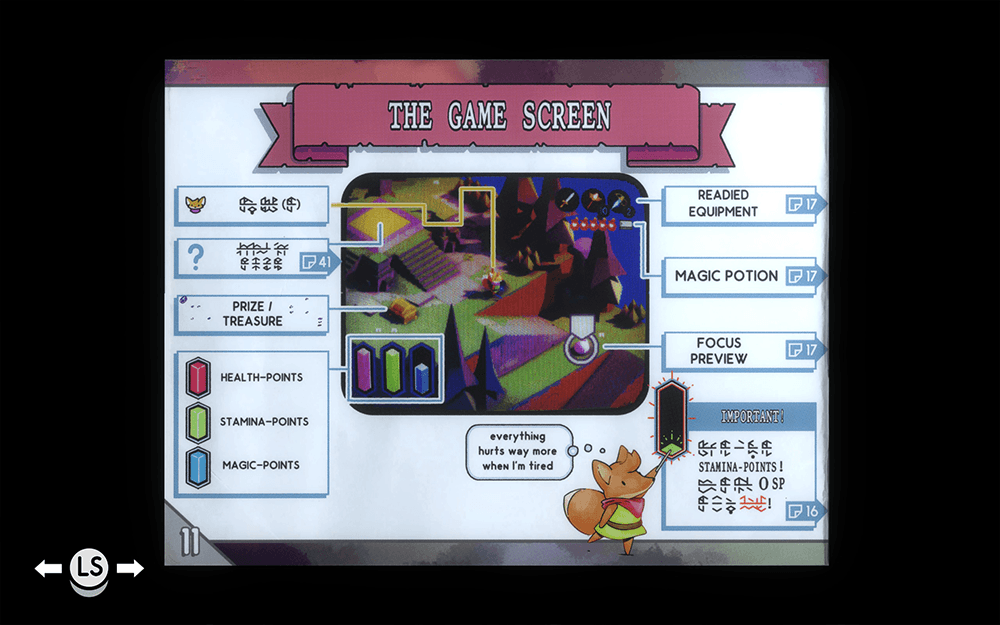
Tunic emulates this exact feeling. The game has zero handholding. When you start the game there are no tutorials or explanations — you wake up on the shore of this beautiful world and start exploring on your own. When you encounter NPCs or other kinds of text, like in your inventory, you aren't able to read it. Most of it is written in its own mystical language. Only some words or numbers stand out for you to read.
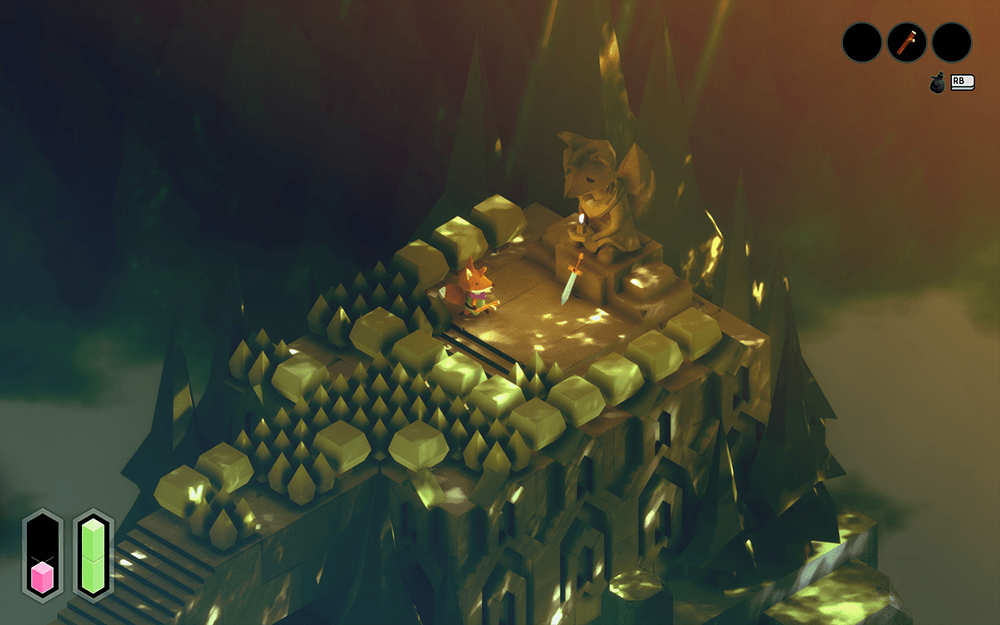
So if you for example find a new item or trinket, you have to mostly figure out on your own what it does or how it works. Now I say mostly because one of Tunic's core mechanics is its own in-game booklet. During your playthrough you will find pages of this booklet, which is heavily inspired by old game booklets.
As with the rest of the game, you can't read most of it. However the booklet is filled with small hints — like someone brought a used copy of a game and the previous owner wrote down some notes in the booklet. Finding more of those pages is one of the biggest rewards Tunic offers for exploration, and completing the booklet also ties into the biggest and best secret Tunic has to offer.
How does Tunic play?
Tunic plays like a mix between classic 2D Zelda and Dark Souls. You lock on to an enemy, dodge or parry their attacks and strike back. Similar to Dark Souls you can die quite fast. Also like in Dark Souls you can level up your attributes and use potions to heal, refilling them at shrines.
The bosses especially can be really challenging and in terms of scale reminded me a lot of Dark Souls. However, sadly, this is where Tunic has its biggest weak point. Combat is just not as precise as it needs to be for such a punishing gameplay loop. Often you feel like you hit the enemy but you didn't, or you get hit even though you shouldn't have. This can lead to some frustrating moments.
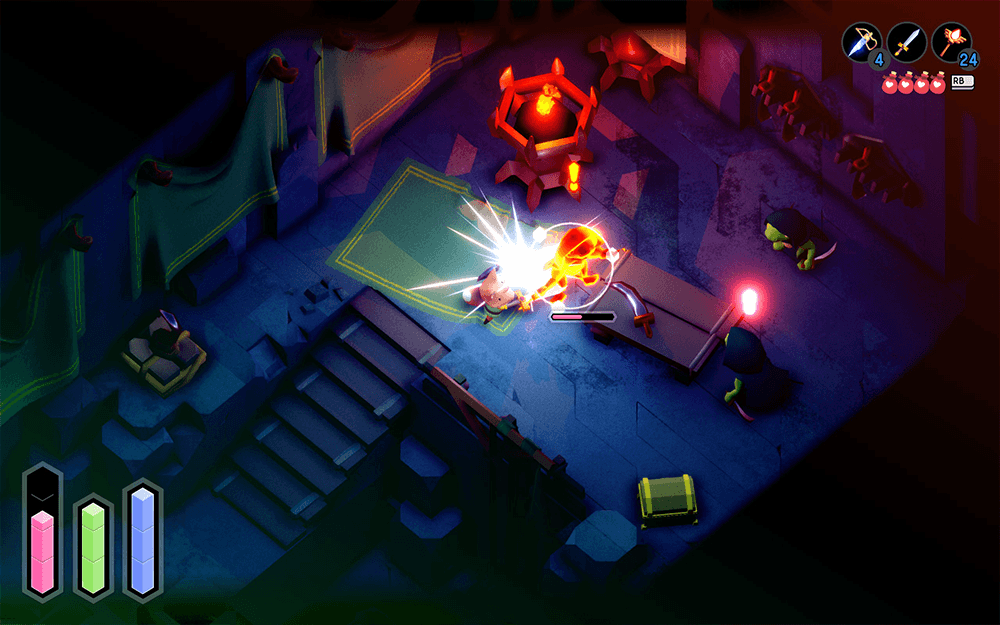
The game does give you more and more tools like ranged weapons or bombs to deal with enemies, which can be very helpful. However, I must admit that compared to games like Mina the Hollower or Silksong, Tunic's combat just feels poor.
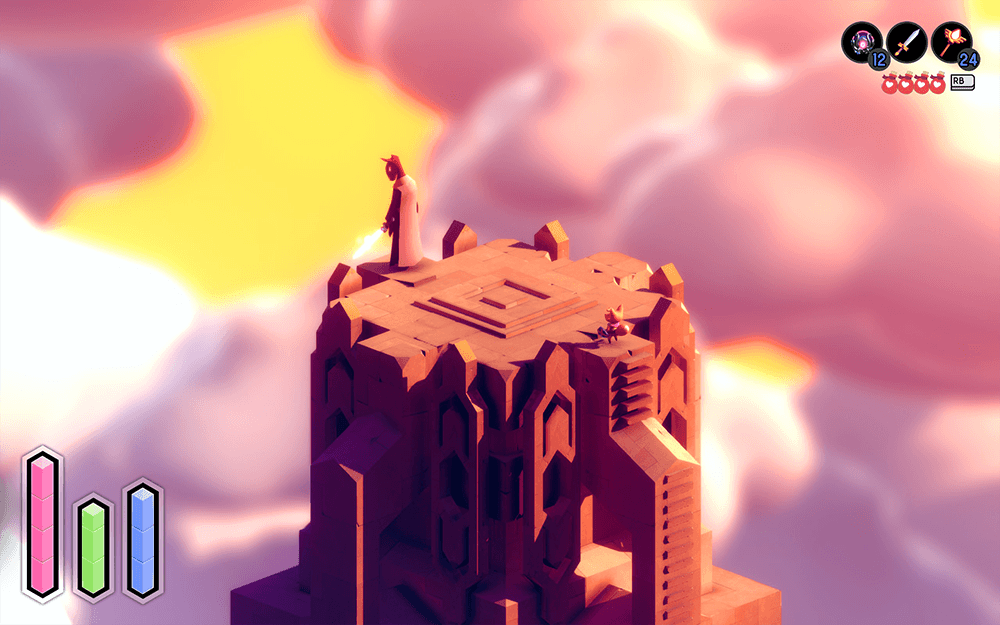
Other than combat, Tunic's focus is on exploration, and it's here where it shines the most for me. The world is filled with secrets and a sense of wonder. The game cleverly plays with its camera, zooming out or changing angles when needed to give you an amazing sense of scale. It was a joy to get lost in this world.
What also helps is that the world feels believable and offers many surprising moments. Elements you've seen for hours without knowing what they do suddenly get a purpose because you found the right page of your booklet explaining how to interact with them. It's here where Tunic really made me feel like a kid again.
Unveiling the Layers
Before I started playing Tunic I often read about how complex and hidden this game's puzzles are supposed to be. It is often compared to games like Blue Prince or Outer Wilds. If you don't know those games, their puzzles are very complex and layered — often only revealing their deeper meaning after hours and hours of playing.
Tunic has those elements as well, especially when it comes to the booklet. There is one end-game puzzle involving the booklet that I found breathtaking. However, I still felt a little let down after discovering how some other end-game puzzles work. Without spoiling anything, many of those secret puzzles felt more like busy work to me.
The same goes for the last 15% of the game. After reaching the end you are pretty much sent back out into the world to revisit all the places you've been before in order to unlock what's needed to defeat the final boss. Tunic's pacing had been amazing up until this point, but here it lost a lot of steam and dragged on a bit.
A masterpiece lost in time
Tunic came out in 2022 and I only played it now, four years later. I can totally see why so many people loved Tunic back then and called it a masterpiece. Exploring the world made me feel like a kid again, and the booklet is such a charming and clever idea. There is a lot to love here.
However, I do feel like playing this game four years later harmed my experience a little. A game like Mina the Hollower outshines Tunic in almost every aspect, and going in with such high expectations didn't help either. I doubt I would have felt let down by the end-game secrets if I hadn't expected something like Blue Prince.
Still, all in all, I had a great time with Tunic. If you like Zelda or Dark Souls, this feels like a must-play title. It's not without its flaws, but it has a sense of wonder and magic that many modern titles lack, and for that I'm grateful to have experienced it.
Rating: Strongly Recommended
Rating System Order: Masterpiece | Essential | Strongly Recommended | Recommended | Mixed Feelings | Disappointing
Vaulted: Games that make it into the Kasur Gaming Vault have a special place in my heart and are games that define my gaming taste.